

Apono is now part of 1Password, expanding secure access governance for the AI era

Read More

Privileged Access Management Without Standing Privileges

Apono, now part of 1Password, is the cloud-native privileged access management platform that grants just-in-time access to humans, machines, and AI agents, then revokes it automatically. Security, IAM, and DevOps teams cut standing privilege risk without parking engineers in a ticket queue.

Trusted by security teams worldwide:

Big panda Bloomreach Carisls Cybereason HP Human iHerb Instashop Intel JAsper Labelbox Openweb Outdoorsy Rho Storeable Swisscom Workday

The problem

Standing privileges are your
biggest controllable liability

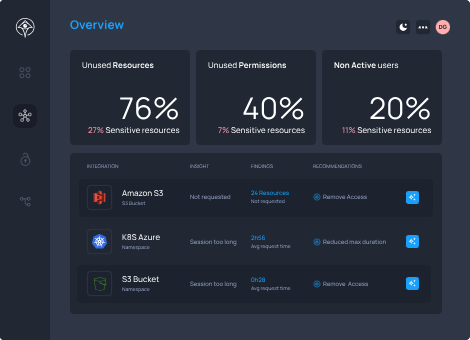
Most organizations still run on always-on admin rights that sit unused until an attacker needs them. Security teams fight sprawling roles. Engineers wait on tickets. Auditors ask who touched production, and the answers live in five tools.

88%

Of attacks exploit existing privileges

Unused standing privileges pile up across cloud, Kubernetes, and databases, increasing the attack surface.

87%

Time spent managing excess access

Amount of time spent managing excess standing privileges access rather than being productive.

$300K+

Cost per hour of downtime

When access is managed manually, downtime is inevitable.

Privileged access management
that enables the work

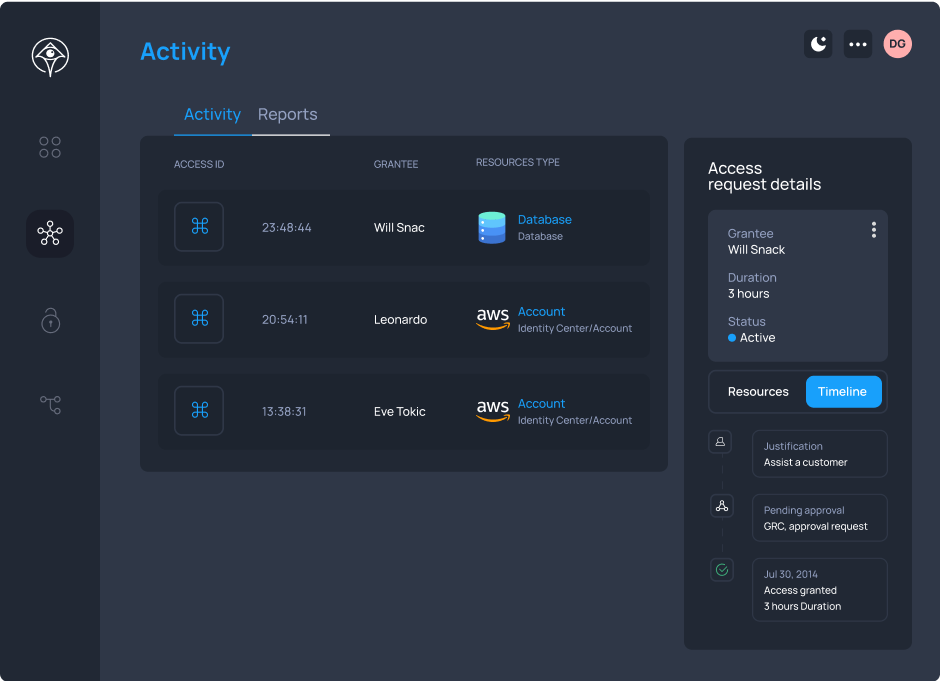
Apono gives engineers and AI agents the permissions they need, only when they need them. Standing privilege risk drops because access is created at runtime, scoped to the task, and revoked when the work ends. Audit evidence is produced as access already runs, which supports compliance programs without a separate evidence hunt.

Privileged access management (PAM) controls who can use elevated permissions on sensitive systems, for which actions, and for how long. Modern PAM pairs Just-in-Time (JIT) grants with Zero Standing Privilege (ZSP) so privileged rights do not linger after the task.

AI Agent Security

Deploy AI agents safely

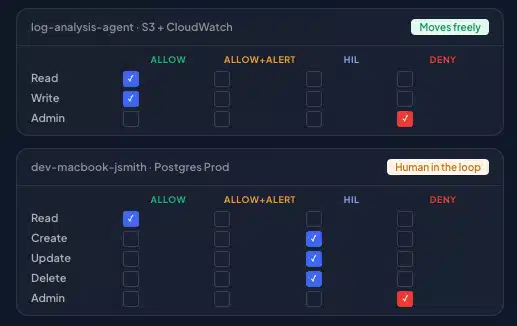
Give agents the privileges they need without standing admin access. Intent-Based Access Control (IBAC) on Apono Agent Privilege Guard checks what an agent declares it will do against what it actually does at runtime. Copilots and agents stay inside defined boundaries, and access is revoked when the task ends.

Risk Elimination

Eliminate standing privilege risk

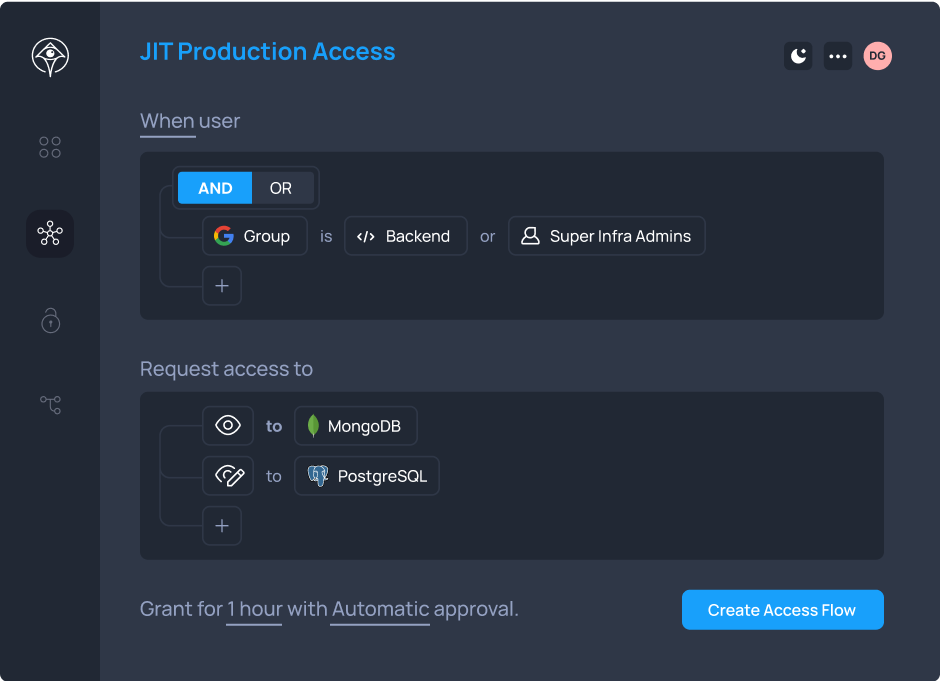
Enforce JIT and just-enough access across identities and environments so ZSP is the default. See who has privileged access, what they are doing with it, and when it expires, without waiting on periodic manual reviews to stay current.

Developer Experience

Accelerate without blocking

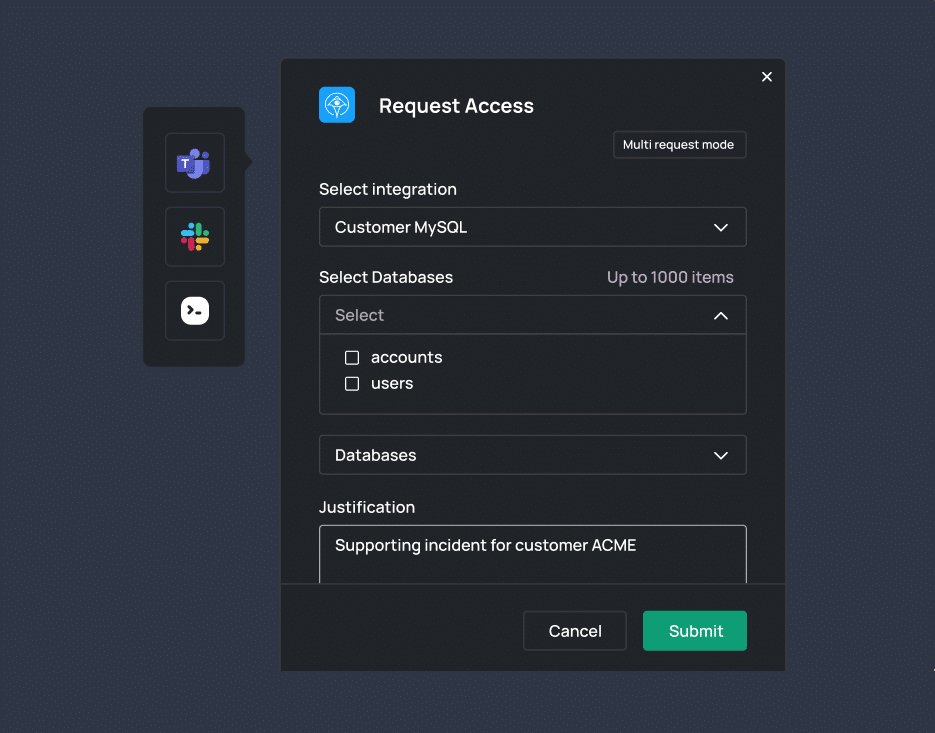
Engineers request and receive access through Slack, the CLI, service workflows, or Apono Assist, wherever they already work. Controls run at request time. Teams stay productive while least privilege stays enforced.

Cloud-Native

Scale without role sprawl

Apono creates roles dynamically based on what is needed, when it is needed, and in the native policy language of AWS, Azure, GCP, Kubernetes, and your databases. You set business guardrails. Apono writes the short-lived permissions, so you are not maintaining a growing library of pre-built roles.

Compliance

Pass audits with less friction

Legacy PAM often leaves auditors with long session recordings and fragmented logs. Apono logs every request, approval, grant, and revocation with business context. AI-generated session summaries turn review into readable evidence that helps teams produce evidence for SOC 2, HIPAA, GDPR, PCI DSS, and related compliance programs.

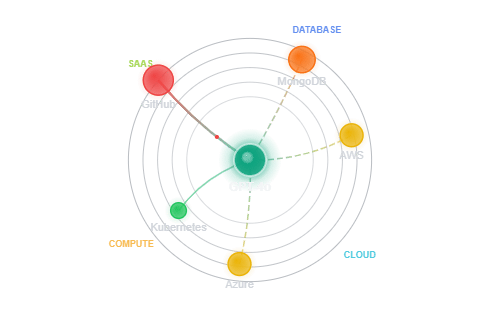
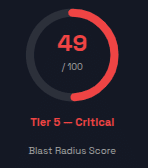
Scope your blast radius

See exactly how much damage a compromised AI agent or identity could do across every connected integration in your environment.

Platform Overview

Runtime Privilege Orchestration

Apono creates IAM roles, permissions, and access policies on the fly at request time, scoped to the exact need and in the native policy language of your cloud platform. No pre-provisioned role sprawl. Access exists only when it is needed, and only for what is required, for any identity that requests it.

Explore Runtime Privilege Orchestration →
Runtime Privilege Orchestration
Dynamic Guardrails

Every access decision factors in who is requesting, what they are trying to do, which environment they are touching, and the risk of that action. Policies adapt as the environment changes, without constant manual rewrites of static rules.

Explore Dynamic Guardrails →
Dynamic Guardrails
AI Agent Privilege Control

As AI agents move into production infrastructure, they cannot inherit standing admin access. Apono gives every agent scoped privileges for its task, then validates intent against actual actions through IBAC.

Explore AI Agent Privilege Control →
AI Agent Privilege Control
Unified Audit and Compliance

Every access request, approval, and action is logged with full business context: who received access, what they accessed, when, why it was approved, and what they did. Anomaly detection flags behavior that drifts from normal patterns so audits start from a complete trail.

Explore Unified Audit and Compliance →
Unified Audit and Compliance

One platform. Every identity.
Zero standing privileges.

One Platform, Three Modules

Deploy what you need,
when you need it.

Start with the environments that matter most, then add capabilities as your access requirements evolve.

🖥️

Foundational

Apono Infrastructure Guard

Secure privileged access to on-prem and hybrid infrastructure: databases, Kubernetes, compute, and more. Infrastructure Guard combines account vaulting, MFA-enforced access requests, and dynamic guardrails to enforce ZSP at the infrastructure layer. Every session becomes passwordless, logged, and fully auditable.

Cloud-Native

Apono Privileged Cloud

Apono Privileged Cloud extends ZSP across cloud platforms using provider-native language and dynamic guardrails. Environments change faster than static roles can keep up. Engineers request and receive JIT access through Slack, Teams, Jira, or the CLI.

Agentic-Forward

Apono Agent Privilege Guard

AI agents cannot wait forever on manual approvals, and they cannot inherit standing admin access. Agent Privilege Guard applies the same JIT model to non-human identities, with IBAC. Every agent declares its intent before acting, and Apono validates that intent against actual actions at runtime.

All three modules share a unified policy engine, privilege orchestrator, and audit trail, so adding capabilities does not mean starting over.

Why Apono

Cloud-native privileged access management
built for runtime access

Legacy PAM still centers standing access. Apono replaces that model with runtime privileges for the AI era.

Runtime privilege creation, not predefined roles

Many tools depend on pre-configured roles in every environment. That means role sprawl, role libraries to maintain, and static definitions that lag dynamic infrastructure. Apono creates permissions at request time in the native policy language of AWS, Azure, GCP, Kubernetes, and your databases.

Dynamic guardrails, not static group maps

Static rules often stop at “user in group, group on resource.” Apono applies contextual guardrails that weigh what is requested, where it runs, why it is needed, and how risky the action is, so approvals match real risk.

Built for every identity type

Apono governs engineers, automation pipelines, copilots, and autonomous agents on one cloud-native platform, applying the same ZSP principles to every identity type.

Legacy PAM Apono
Access model Standing roles; pre-provisioned, persistent, hard to revoke at scale Runtime privileges; created on demand, scoped to the task, automatically revoked
Policy engine Static rules; user belongs to group, group has access to resource(s) Contextual guardrails; factors in what, where, why, and how risky
User experience Separate portals, manual approvals, and context switching Access through CLI, Slack, Teams, Jira, wherever engineers already work
Identity scope Human identities first; weak fit for machines and AI agents Humans, machines, and AI agents; unified governance
Audit trail Fragmented logs; incomplete context for compliance and forensics Unified audit trail with full business context

Access model
Legacy PAM
Standing roles; pre-provisioned, persistent, hard to revoke at scale
Apono
Runtime privileges; created on demand, scoped to the task, automatically revoked
Policy engine
Legacy PAM
Static rules; user belongs to group, group has access to resource(s)
Apono
Contextual guardrails; factors in what, where, why, and how risky
User experience
Legacy PAM
Separate portals, manual approvals, and context switching
Apono
Access through CLI, Slack, Teams, Jira, wherever engineers already work
Identity scope
Legacy PAM
Human identities first; weak fit for machines and AI agents
Apono
Humans, machines, and AI agents; unified governance
Audit trail
Legacy PAM
Fragmented logs; incomplete context for compliance and forensics
Apono
Unified audit trail with full business context

Customer stories

Trusted by teams who can't afford standing risk

Apono eliminated delays and excessive privileges. Everyone who needs access can get it very easily, and we really reduced the amount of overprivileged accounts that we had.

Apono allows us to generate temporary permissions upon request based on a very granular set of rules, delivering huge value to the business.

Knowing that access will be provided in minutes keeps workflows on track. The efficiencies gained have been remarkable.

We required a solution to eliminate excessive standing access without slowing down engineers' work. My manager was excited about tightening up Kubernetes security.


Integrations

Access that works where your team already does

Apono connects to your entire stack out of the box.
If your team already uses it, Apono already works with it.

AWS

Azure

Google Cloud

Okta

Entra ID

Kubernetes

MongoDB

Databricks

GitHub

GitLab

Slack

MS Teams

Jira

PagerDuty

Datadog

Snowflake

85+ out-of-the-box integrations across cloud, identity, infrastructure, DevOps, and ITSM.

Your privileged access management stack should not run on standing access

Join teams that replaced standing privileges with JIT access across cloud, infrastructure, and AI environments, without parking engineers in a ticket queue.